



The Women Who Built the Way We Die Well

March is Women’s History Month, a time to recognize not just the milestones women have reached, but the quiet, essential work they’ve done in rooms many people don’t want to think about.
There’s a particular kind of courage required to sit with someone who is dying. To stay. To not look away. To say: you matter, and we will make this as good as it can be.
For most of modern history, that courage has belonged disproportionately to women.
Four Women Changed Everything
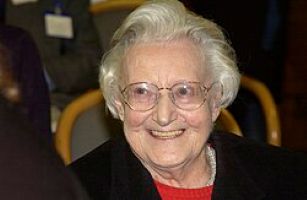
In 1966, four women gathered in New Haven, Connecticut. Dame Cicely Saunders (pictured), Florence Wald, Elisabeth Kübler-Ross, and Zelda Foster came together alongside a handful of like-minded colleagues with a shared belief that Western medicine had gotten something deeply wrong about dying.
At that moment, it was common practice for doctors to withhold terminal diagnoses from patients. People died in hospital beds, often in pain, often without the truth. These four women believed that was unacceptable, and they set out to change it.
What followed was a 20-year campaign that gave birth to the modern hospice movement.
Zelda Foster was the first to put the problem into writing. Her 1965 article in the Journal of the National Association of Social Workers named the “conspiracy of silence” that dying patients faced and brought patient-oriented goals of care into the center of the conversation.
The following year, she and Dame Cicely Saunders, Florence Wald, and Elisabeth Kübler-Ross gathered in New Haven to begin turning those ideas into action. Saunders returned to London and opened St. Christopher’s Hospice in 1967, establishing that end-of-life care could be grounded in dignity, pain management, and holistic support rather than in the mere absence of a cure.
That same year, Elisabeth Kübler-Ross began interviewing dying patients at the University of Chicago, research that would become her landmark 1969 book On Death and Dying, which introduced the five stages of grief and opened a conversation about death that had largely been kept shut.
Florence Wald took that growing momentum across the Atlantic and founded Connecticut Hospice in 1974, the first hospice in the United States. Zelda Foster went on to co-found the first Hospice Association in New York.
Together, these women didn’t just build institutions. They built a framework for how we understand what it means to care for someone at the end of life.
It Took Root Here, Too
The work of those four women in New Haven didn’t stay in New Haven. It traveled. It took root in communities across the country, including ours.
In 1978, a woman in Larimer County was dying of cancer. A small group of women rallied together, volunteered their time, and cared for her in the final months of her life. That act of loving kindness became the seed of what is now Pathways. It was possible because Saunders, Wald, Kübler-Ross, and Foster had already done the hard work of proving that this kind of care deserved to exist.
Nearly five decades later, we are still here. Still shaped by that founding spirit. Still caring for Northern Colorado residents regardless of financial circumstance. Still doing the work all of these women believed was worth doing.
The Work Continues
Today, nearly 90% of hospice registered nurses are women. According to the U.S. Bureau of Labor Statistics, women make up 87% of home health aides and 80% of personal care aides. The majority of hospice clinicians are women.
These aren’t just statistics. They represent millions of hands held, millions of difficult conversations navigated, and millions of families supported through something they didn’t know how to do alone.
We are grateful for every human who has answered this calling. And today, we lift up the women whose vision made this work possible in the first place.
Our Work Is Far from Over
Hospice remains misunderstood and underutilized, and there is much ground left to cover. We know much of the work is about having earlier, more honest conversations about death and dying.
It is about honoring people’s wishes before a crisis makes those wishes harder to hear.
It is about demystifying what can be a profoundly beautiful part of the human journey, and building real partnerships between families, caregivers, and the broader healthcare community so that dying with dignity is a bridge, not a barrier.
The movement those four women launched in 1966 is not finished. But it has a foundation, one built by people who refused to look away.
This month, we honor them. And we honor everyone, past and present, who has had the courage to stay.
More information on Pathways and our hospice and palliative care can be found at pathways-care.org.
Photo source: History of Modern Biomedicine Research Group